5 Apr 2026·6 min read·Greg Turner
RAG Patterns for Enterprise AI: A Practical Guide
Retrieval-Augmented Generation (RAG) lets AI systems answer questions using your organisation's own data. Learn the practical patterns, architecture decisions, and implementation approaches that make RAG work in enterprise environments.
What This Article Covers
- Understanding how RAG connects large language models to your organisation's own data.
- Implementing effective document chunking, metadata enrichment, and embedding strategies.
- Choosing retrieval patterns including vector search, hybrid search, and re-ranking.
- Optimising generation quality through prompt engineering and citation management.
- Addressing enterprise requirements including access control, data freshness, and cost management.
- Evaluating RAG quality with systematic testing frameworks.
- Understanding the limitations of RAG and where human oversight remains essential.
Who This Article Is For
- Technology leaders evaluating RAG for enterprise knowledge management and AI applications.
- Solution architects designing AI systems that need to work with organisational data.
- Development teams implementing RAG pipelines and needing practical pattern guidance.
- AI consultants advising clients on enterprise AI architecture.
- Business leaders wanting to understand how AI can be grounded in their organisation's specific knowledge.
Introduction
Large language models are powerful, but they have a fundamental limitation: they only know what they were trained on. They cannot answer questions about your organisation's internal documents, your proprietary data, or information that has changed since their training was completed.
Retrieval-Augmented Generation (RAG) solves this by connecting an AI model to your own data sources. When a user asks a question, the system retrieves relevant information from your documents, databases, or knowledge bases, and provides it to the AI model as context for generating an accurate, grounded response.
RAG has become the dominant pattern for enterprise AI applications because it combines the conversational intelligence of large language models with the specific, current, authoritative information that enterprise use cases require. But implementing RAG effectively involves architectural decisions and technical patterns that significantly affect quality, performance, and cost.
This article provides a practical guide to RAG patterns for enterprise AI, covering the core architecture, implementation approaches, and the decisions that determine whether a RAG system delivers real value.
How RAG Works
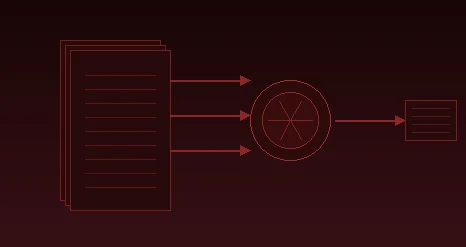
A RAG system has three core components: an ingestion pipeline that processes your documents and data into a searchable format, a retrieval system that finds the most relevant information for a given query, and a generation system that uses the retrieved information to produce an accurate response.
The ingestion pipeline takes your source documents (PDFs, web pages, database records, emails, spreadsheets) and converts them into chunks of text, each embedded as a vector (a numerical representation that captures semantic meaning). These vectors are stored in a vector database where they can be searched efficiently.
When a user asks a question, the retrieval system converts the question into a vector and searches the vector database for the most semantically similar chunks. The top results are passed to the language model along with the user's question, and the model generates a response grounded in the retrieved information.
Ingestion Patterns
Document Chunking Strategies
How you split documents into chunks significantly affects retrieval quality. Chunks that are too small lose context. Chunks that are too large dilute relevance and consume the model's context window inefficiently.
Common chunking strategies include fixed-size chunking (splitting at a set character or token count with overlap), semantic chunking (splitting at natural boundaries like paragraphs, sections, or topic shifts), hierarchical chunking (maintaining parent-child relationships between document sections and subsections), and document-aware chunking (using document structure like headings, tables, and lists to determine split points).
The right strategy depends on your document types. Technical documentation with clear section structure benefits from document-aware chunking. Conversational content like emails and chat logs works better with semantic chunking. Most enterprise implementations use a combination of approaches for different document types.
Metadata Enrichment
Adding metadata to chunks improves retrieval quality. Useful metadata includes the source document title and path, the document date and version, the section heading hierarchy, document type and category, and access control information (who is allowed to see this content).
This metadata enables filtered searches (only retrieve from documents of a certain type or date range), improves relevance ranking, and supports access control in multi-user environments.
Embedding Model Selection
The embedding model converts text into vectors. The choice of model affects retrieval quality, processing speed, and cost. Larger models generally produce better embeddings but are slower and more expensive to run. For enterprise use, the key considerations are whether the model performs well on your specific domain vocabulary, whether it supports the languages your documents use, and whether it can run within your infrastructure constraints (on-premises, specific cloud region, data sovereignty requirements).
Retrieval Patterns
Vector Search
The most common retrieval approach is vector similarity search: finding the chunks whose embeddings are most similar to the query embedding. This works well for semantic matching (finding information related to the meaning of the question) but can miss exact keyword matches that a traditional search would find.
Hybrid Search
Hybrid search combines vector similarity with traditional keyword search, blending the results to capture both semantic relevance and exact term matching. This consistently outperforms either approach alone in enterprise settings where queries mix natural language with technical terms, product names, and specific identifiers.
Query Transformation
Sometimes the user's query as stated is not the best query for retrieval. Query transformation techniques include query expansion (adding synonyms or related terms to broaden the search), query decomposition (splitting a complex question into sub-questions that are each searched separately), and hypothetical document embedding (generating a hypothetical ideal answer and using its embedding to search, rather than the question's embedding).
These techniques can significantly improve retrieval quality, particularly for complex or ambiguous queries.
Re-ranking
After initial retrieval, a re-ranking step can improve the order of results. A cross-encoder model evaluates each retrieved chunk against the original query and produces a more accurate relevance score than vector similarity alone. Re-ranking adds latency but often improves answer quality substantially.
Generation Patterns
Context Window Management
The retrieved chunks must fit within the language model's context window along with the system prompt and the user's query. Managing this budget effectively means selecting the right number of chunks (more is not always better), ordering chunks by relevance (most relevant first), and truncating or summarising chunks that are longer than necessary.
Prompt Engineering for RAG
The system prompt for a RAG application needs to instruct the model to base its answers on the provided context, indicate when the context does not contain enough information to answer the question, cite its sources so users can verify the information, and avoid hallucinating information not present in the context.
Getting the prompt right is critical for RAG quality. A well-crafted prompt dramatically reduces hallucination and improves the accuracy and usefulness of responses.
Citation and Source Attribution
Enterprise users need to know where information came from so they can verify it and assess its currency and authority. RAG systems should provide citations that link back to the source documents, making the AI's responses auditable and trustworthy.
Enterprise Considerations
Access Control
In enterprise environments, not all users should be able to access all documents. RAG systems need to enforce access control at the retrieval level, ensuring that users only receive information from documents they are authorised to see. This requires integrating with your existing identity and access management systems.
Data Freshness
Enterprise data changes. Documents are updated, new content is published, and old information becomes outdated. Your RAG ingestion pipeline needs to handle updates efficiently: re-processing changed documents, removing deleted content, and ensuring the vector database reflects the current state of your information.
Evaluation and Quality
Measuring RAG quality requires evaluating retrieval accuracy (are the right chunks being found?), generation accuracy (are the answers correct and grounded in the context?), and end-to-end quality (do users get useful answers to their questions?). Building an evaluation framework with representative test questions and expected answers is essential for ongoing quality improvement.
Cost Management
RAG systems incur costs at multiple points: embedding generation during ingestion, vector database storage and queries, and language model inference during generation. Understanding these cost drivers and optimising each one is important for sustainable enterprise deployment.
What AI Cannot Do
Guarantee Accuracy
RAG significantly reduces hallucination compared to standalone language models, but it does not eliminate it entirely. Critical use cases (medical, legal, financial) should include human review of AI-generated answers.
Replace Data Governance
RAG surfaces information from your documents, which means the quality and accuracy of your source data directly determines the quality of RAG responses. Poor data governance leads to poor RAG quality regardless of how well the system is implemented.
Understand Everything
RAG works best with text-based content. Highly visual documents (diagrams, charts, complex tables) may not be well-represented by text-based chunking and embedding. Multi-modal RAG approaches are emerging but are not yet mature for enterprise deployment.
Conclusion: RAG Makes Enterprise AI Practical
RAG is the pattern that makes large language models useful for enterprise applications. It grounds AI responses in your organisation's own data, making the output specific, current, and verifiable rather than generic and potentially hallucinated.
At Humanising Technologies, we design and implement RAG systems for enterprise clients. From document ingestion pipelines to retrieval optimisation, from prompt engineering to access control integration, our approach delivers RAG systems that are accurate, performant, and aligned with your organisation's data governance requirements.
Ready to build an AI system that knows your business? Contact us to discuss your RAG implementation.
Related reading:
Working through something like this?
A short description of the problem is enough to start.